
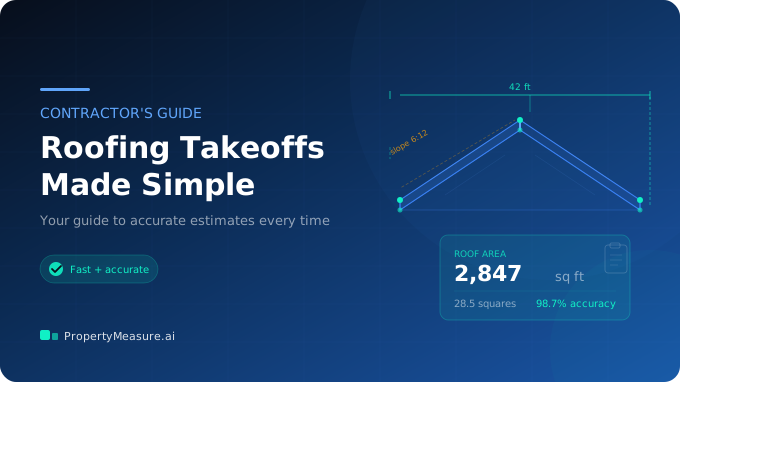
Roofing Takeoffs Made Simple: A Contractor's Guide to Accurate Estimates
A roofing takeoff is the process of calculating the exact quantities of materials needed for a project before work begins. Getting it right means accurate bids, fewer surprises mid-job, and better margins. Getting it wrong is expensive for everyone involved.
What a Roofing Takeoff Measures
Primary Measurements
- Total roof area (in squares — 1 square = 100 sq ft)
- Roof pitch or slope
- Ridge and hip lengths
- Valley lengths
- Eave and rake lengths
Additional Details
- Number of penetrations (vents, pipes, chimneys)
- Skylight and dormer dimensions
- Flashing requirements
- Waste factor (typically 10–15%)
The Traditional Takeoff Process
Traditionally, a roofing contractor would either walk the roof with a measuring tape — time-consuming and physically risky — or manually trace blueprints. Both methods are accurate but slow, and they require either a site visit or access to detailed drawings.
For contractors bidding on multiple properties simultaneously, the takeoff process becomes a real bottleneck.
How Satellite Tools Help
High-resolution satellite imagery lets contractors calculate roof area and estimate linear measurements from their office. It works best for initial bids on standard residential and low-slope commercial roofs.
What satellite measurement works well for:
- Estimating footprint area for flat or low-slope commercial roofs
- Initial bids on residential re-roofs where the footprint is clearly visible
- Quickly comparing multiple properties without site visits
- Pre-qualifying leads before investing time in a full manual takeoff
Tips for More Accurate Roofing Estimates
- Always apply a pitch multiplier — satellite tools measure the horizontal footprint. A 6/12 pitch increases actual roof area by about 12% over the footprint.
- Add a standard waste factor — 10% for simple gable roofs, up to 15–20% for complex rooflines with multiple valleys and hips.
- Count ridges and valleys from the image — satellite images show roof planes clearly; use them to count ridges and valleys before calculating linear materials.
- Use satellite for the quote, the site visit for the contract — remote measurement is a great first step. Before signing, a physical inspection catches details the image won't show: decking condition, existing layers, flashing quality.
A Note on Accuracy
Satellite-based roofing takeoffs are most reliable for estimating and initial bidding. For material ordering and final project scoping, a physical walkthrough remains the industry standard. Use remote tools to move faster in your sales process — not to skip the final verification step.
Written by
Vikram Vangara
@ PropertyMeasure.ai